American Allegiance Pest Control
Blog
What’s the Safest Way to Deal With Wasp Nests at Home?
Introduction: Why Wasp Nests Shouldn’t Be Ignored
You notice increased wasp activity near the roofline. A papery nest is forming under the eaves. Maybe there’s buzzing near the garage or patio. In Fort Myers, Florida, warm weather allows wasps to remain active for much of the year, making nest removal a common concern for homeowners.
The biggest question isn’t just how to remove a wasp nest — it’s how to do it safely. Wasps can become aggressive when threatened, and improper removal can lead to painful stings or even medical emergencies.
Let’s walk through the safest approach, when DIY might work, and when professional help is the smarter choice.
Why Wasp Nest Removal Can Be Dangerous
Wasps defend their nests instinctively. When disturbed, they release pheromones that signal other wasps to attack.
In Fort Myers, common species such as paper wasps and yellowjackets can build nests:
Under roof eaves
Inside soffits
In shrubs and hedges
Inside wall voids
Unlike bees, wasps can sting multiple times. For individuals with allergies, a single sting can trigger a severe reaction.
Even without allergies, multiple stings can result in swelling, dizziness, and significant discomfort.
Because of this, safety must come before speed when dealing with a nest.
Identifying the Type and Location of the Nest
Before taking any action, it’s important to evaluate the situation carefully.
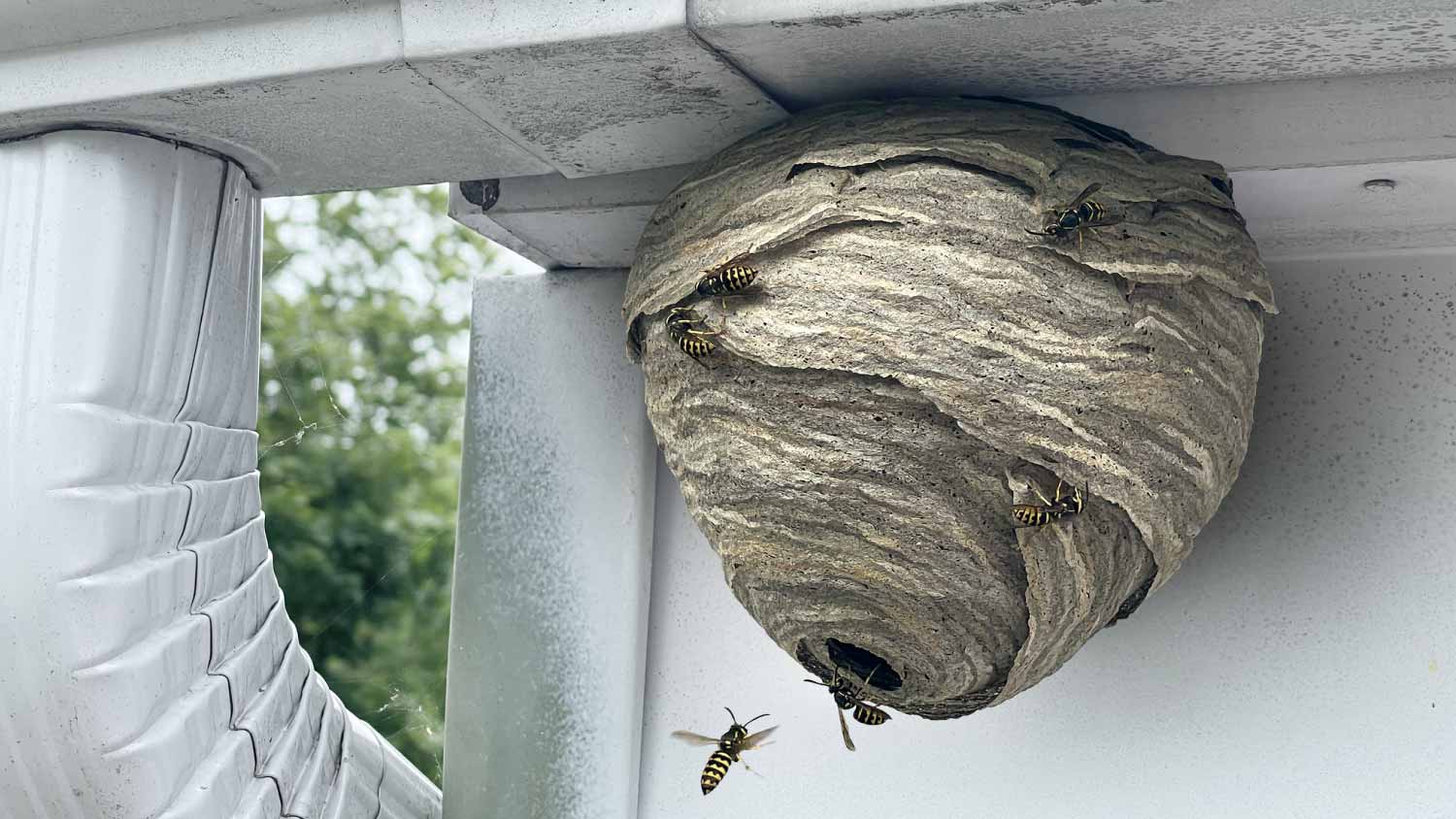
Small, Exposed Paper Nest
These are often umbrella-shaped and attached to eaves or branches. If small and recently formed, they may contain only a few wasps.
Ground Nest
Yellowjackets sometimes build nests in soil or landscaping beds. These are more dangerous because they are harder to see and often house larger colonies.
Enclosed or Hidden Nest
If wasps are entering a wall cavity or attic vent, the nest may be inside the structure. These situations are the most hazardous and should not be handled without proper equipment.
The more concealed or populated the nest, the higher the safety risk.
The Safest DIY Approach for Small Nests
If the nest is small, visible, and accessible without a ladder, some homeowners choose to remove it themselves. Safety precautions must be followed carefully.
Step 1: Choose the Right Time
Wasp activity is lowest in early morning or late evening when temperatures drop. Attempting removal during peak daytime hours increases risk.
Step 2: Wear Protective Clothing
Thick long sleeves, gloves, closed-toe shoes, and face protection reduce sting exposure. Avoid loose clothing that can trap wasps.
Step 3: Use an Approved Wasp Spray
Stand at a safe distance and apply a long-range spray directly at the nest opening. Follow product instructions precisely.
Step 4: Wait Before Removing the Nest
Do not knock the nest down immediately. Wait at least 24 hours to ensure all wasps are eliminated.
Step 5: Remove and Dispose Safely
Once inactive, carefully detach the nest using a tool rather than your hands.
Even with these steps, DIY removal carries risk. If you feel uncertain at any stage, stopping and calling a professional is the safer decision.
When Professional Removal Is the Safer Option
There are clear situations where professional service is strongly recommended.
Nest Is Large or Highly Active
A large colony increases the chance of multiple stings.
Nest Is Located High Off the Ground
Rooflines, second-story eaves, and tall trees create fall hazards in addition to sting risks.
Nest Is Inside a Wall or Structure
Hidden nests require specialized treatment to eliminate the colony without causing wasps to disperse further into the home.
Someone in the Household Has a Sting Allergy
This alone makes DIY removal unsafe.
In Fort Myers, Florida, professional pest technicians use protective equipment and targeted products to neutralize nests efficiently while minimizing risk to residents.
Comparing DIY vs. Professional Removal
Below is a simplified safety comparison.
While DIY may cost less upfront, the risk level increases depending on nest size and placement.
Preventing Future Wasp Nest Formation
After removal, prevention is key — especially in Fort Myers where nesting season lasts much of the year.
Prevention strategies include:
Sealing small gaps around soffits and vents
Reducing exposed food sources outdoors
Keeping garbage lids tightly secured
Regular exterior inspections of rooflines and patio areas
Routine pest inspections help detect early nest formation before colonies expand.
Frequently Asked Questions
Are wasps more aggressive in Florida’s heat?
Warmer temperatures increase activity levels. During peak summer months in Fort Myers, wasps are highly active and defensive.
Is it safe to knock down a nest with a broom?
No. Physically disturbing a live nest without treatment almost guarantees defensive stinging.
Do wasps reuse old nests?
Wasps typically build new nests each season, but old nesting areas may attract new colonies if conditions remain favorable.
How fast can a nest grow?
In warm climates like Fort Myers, nests can expand significantly within weeks.
Should I leave a small nest alone?
Even small nests grow quickly. Early removal is usually safer and easier than waiting.
Conclusion
The safest way to deal with wasp nests at home depends on nest size, location, and risk factors. Small, exposed nests may sometimes be managed carefully with protective measures, but larger or hidden nests pose serious safety concerns.
In Fort Myers, Florida, where wasp activity remains steady for much of the year, early detection and safe removal are essential. Attempting to handle a large or concealed nest without proper protection can result in injury.
For homeowners who want a safe and controlled solution, American Allegiance Pest Control provides wasp nest removal services tailored to local conditions. Addressing nests promptly not only protects your family from stings but also prevents colonies from expanding around your home.

Our Services
Helpful Links
Areas Served
Contact Information
12011 Amedicus Lane Unit 1 Fort Myers, Florida 33907
Mon - Fri: 8:00 am - 4:30 pm
Sun: Closed
*After-Hours Available by Appointment
Emergency Services Available
© 2025 All Rights Reserved | American Allegiance Pest Control