American Allegiance Pest Control
Blog
Wasp vs Hornet Infestations: What Fort Myers Residents Must Do
Introduction
Fort Myers residents deal with stinging insects year-round, especially in warm months when outdoor activity and flowering plants attract nesting behavior. While many homeowners use “wasps” and “hornets” interchangeably, these insects behave very differently—especially when nesting near homes, patios, lanais, and rooflines. Misidentifying them often leads to dangerous mistakes, increased aggression, and failed DIY removal attempts.
Understanding the difference between wasp and hornet behavior, nest structure, and risk levels is essential for choosing the right response. This guide breaks down how to identify each, why Fort Myers’ climate encourages infestations, and what steps residents must take to stay safe and resolve issues effectively.
Why Wasp and Hornet Activity Is Common in Fort Myers
Fort Myers has an environment that attracts stinging insects more than most regions.
Warm year-round climate
Mild winter temperatures rarely drop low enough to kill off complete colonies. Many queens survive, leading to stronger spring populations.
Abundant flowering plants
Tropical landscaping—including palms, hibiscus, and bougainvillea—provides nectar sources that wasps and hornets rely on for energy.
Frequent storms
Storm winds damage tree branches and soffits, creating sheltered cavities where stinging insects easily build protected nests.
High insect populations
Fort Myers' abundant insect life provides a steady food source for wasps and hornets, both of which are predatory and require protein for their colonies.
Wasp vs Hornet: Understanding the Difference
Before choosing any treatment or removal approach, it’s crucial to know which species you're dealing with.
Wasps
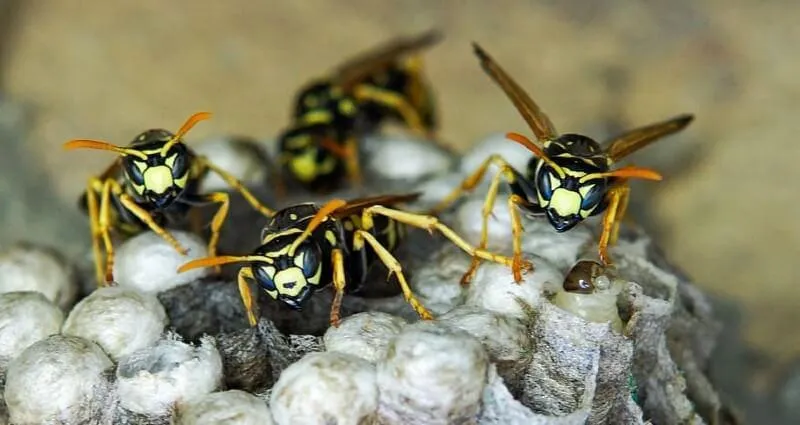
Wasps in Fort Myers typically include paper wasps and yellow jackets. They build paper-like nests that resemble umbrellas or layered combs. Wasps tend to be less aggressive unless provoked or disturbed, and their nests are commonly found under eaves, lanais, door frames, and light fixtures.
Hornets
Hornets are a type of large, aggressive wasp. In Fort Myers, the most common species mistaken for hornets are actually aggressive yellow jackets or baldfaced hornets. These species defend their colonies aggressively and can sting repeatedly. Their nests are usually enclosed, papery spheres or hidden underground.
Why the distinction matters
Wasps = visible nests, predictable behavior
Hornets = highly defensive, harder to locate, riskier to remove
Treating them the same way increases danger and often worsens the infestation.
How to Identify Wasp and Hornet Nests on Your Property
Below are the most common nesting sites for each type in Southwest Florida.
Wasp nests
Wasps tend to build nests in:
corners of lanais and patios
under roof eaves
on porch ceilings
inside open mailboxes or grills
around light fixtures
in attic entry points
These nests are open-faced combs with visible wasps crawling over the surface.
Hornet nests
Hornets prefer:
enclosed wall voids
dense shrubbery
roof soffits
tree branches
shed corners
underground cavities (yellow jackets)
Hornet nests tend to be round, enclosed, and papery—or completely hidden.
Warning Signs of a Growing Infestation
Because early detection prevents dangerous encounters, homeowners should look for these clues:
Increased daytime flight activity
Wasps and hornets are diurnal, so daytime patterns of circling, landing, or hovering indicate a nearby nest.
Soft buzzing from inside walls
This suggests an internal nesting site, often inside soffits or attic voids.
Regular sightings around the same area
If insects repeatedly inspect or land on a specific point, a nest is being built nearby.
Dead insects near windows
This indicates indoor infiltration through attic vents, wall cracks, or gaps around roofs.
Step-by-Step Guide: What Fort Myers Residents Must Do
Below is the clear process homeowners should follow the moment they suspect a wasp or hornet infestation.
1. Identify whether the nest is exposed or hidden
Exposed comb nests typically belong to paper wasps. Enclosed or hidden nests tend to be hornets or yellow jackets. Accurate identification determines urgency.
2. Keep distance immediately
Hornets are triggered by vibrations, rapid movement, or proximity. Even small disturbances such as closing a door or running a lawnmower nearby can provoke aggression.
3. Do not spray or knock down nests
DIY sprays often kill only surface insects and provoke dozens of defenders. Removing nests prematurely forces stinging insects into the home or deeper into structures.
4. Monitor entry points
Watch for insects entering soffits, cracks, deck boards, or ground openings. This helps professionals locate nest locations quickly and safely.
5. Protect pets and children
Pets often disturb nests accidentally. Restrict access to patios, yard corners, and shaded shrubs until removal is complete.
6. Contact a professional for complete removal
Professionals use species-specific treatments that eliminate the colony while preventing secondary infestations. They also identify hidden nests that DIY methods miss.
Additional Tips for Reducing Wasp and Hornet Attraction
Below are practical steps that help reduce the risk of future infestations:
• Keep trash bins tightly sealed to reduce protein attractants
• Clear food residue from outdoor grilling areas
• Repair soffit gaps and seal siding separations after storms
• Trim trees and shrubs where nests often anchor
• Remove stagnant water that attracts prey insects
• Avoid leaving pet food outside
Consistent yard and home maintenance goes a long way toward preventing new nest formations.
FAQs
Are wasps or hornets more dangerous in Fort Myers?
Hornets (including aggressive yellow jackets) pose greater risk due to repeated stings and strong defensive behavior. Wasps are usually less aggressive unless the nest is immediately threatened.
Why do stinging insects return to the same area every year?
If old nest scent or structural cavities remain, scouts naturally reselect the same nesting sites. Proper sealing and cleanup prevent return nesting.
Can nests inside walls damage my home?
Yes. Hornet or wasp nests can trap moisture and attract secondary pests. Over time, they may weaken drywall or insulation and create internal odor issues.
Do wasps or hornets swarm like bees?
They do not swarm in the same way, but hornets rapidly mobilize dozens of defenders if the nest is disturbed.
Does Fort Myers’ storm season increase nest formation?
Yes. Storm damage creates new structural openings and dislodges old nests, causing insects to rebuild in sheltered parts of your home.
Conclusion
Wasps and hornets are common in Fort Myers due to abundant food sources, ideal nesting conditions, and warm weather that allows colonies to stay active for most of the year. While both insects can be intimidating, the key to safe control is proper identification, early detection, and immediate professional intervention when nests are near your home. Attempting DIY removal increases your risk of stings and often leads to repeated nesting or deeper infestation.
Knowing what species you're dealing with—and taking the right steps at the right time—keeps your property safe, prevents injuries, and protects your family from the dangers associated with stinging insect colonies.

Our Services
Helpful Links
Areas Served
Contact Information
12011 Amedicus Lane Unit 1 Fort Myers, Florida 33907
Mon - Fri: 8:00 am - 4:30 pm
Sun: Closed
*After-Hours Available by Appointment
Emergency Services Available
© 2025 All Rights Reserved | American Allegiance Pest Control